


Namasenda on her “Lucky” cover, female voices, fashion and cringe
She's so lucky, she's a star, but she cries, cries, cries…
Interview by ETUI
Photos by Staš Čebular
3.9.2026
First of all, congratulations on your latest single! A Britney Spears cover, iconic. “Lucky” has been something of a touchstone for you for years: you referenced it on your “☆” track with Oklou, performed it at the Denniz Pop Awards in front of some of its original creators, and now you’ve recorded it as a Spotify Single for EQUAL. When did you first connect with the song?
Namasenda: I don't remember the first time I heard it. It must have been when it came out, when I saw the music video. I think that was the first time. I was a very little girl, but I loved it.
As an established musical artist, how do you relate to this song now, compared with the past? How has its meaning changed, and how do you see yourself within the song?
Namasenda: I think I've always related to this song, but obviously it's different now that I'm a woman and not a little girl in her room. I think it's really sad. I connect with the song because of its melancholic feel. She's sad, even though she has all these people around her; she has all this fame, she has everything she's ever wanted, but she's still sad. I feel like that will be the case for me because I'm never satisfied. I can always find an issue. So I feel like that's what I connect with most in the song. And I just love melancholic pop songs.
The original song and its lyrics offer such a precise portrait of fame, loneliness, and performance. How do you relate to those themes in your own life right now, especially as a woman in the music industry?
Namasenda: I think the loneliness part is relevant. As musicians or artists, many of us struggle with loneliness. You only see one side of the artistry. You see someone on stage, or on a billboard, and you’re like, okay, everything is fine, they’re doing great. But there is so much work that goes into being an artist, and it can get really lonely sometimes.
And where do you feel the least lonely?
Namasenda: I feel the least lonely when I am alone, on my couch, watching Netflix.
The original music video for “Lucky” is also so iconic and memorable, especially Britney’s style in it. If you could dress the character of “Lucky” today, what would she be wearing?
Namasenda: It has to be Versace. I don't know why. That's what I see in front of me: a slip dress, a Versace slip dress.
That makes a lot of sense! It seems you have quite a strong relationship with fashion: stylish covers, music videos, a song dedicated to the Clermont Twins on your latest album, and another featuring Mowalola on Unlimited Ammo. You also name-drop fashion brands in your songs, like Dior, Goyard, Cartier…
Namasenda: Just all the things that I can't afford…
Neither can we. What is your relationship with clothing and style? Especially in the context of “Lucky”… is it a facade, a perfect, glamorous armour, or a form of personal expression?
Namasenda: I don’t think it’s black and white. I’ve always loved fashion. I’ve always loved nice things, just not very great for my wallet… But it’s part of me; it’s part of Naomi and Namasenda. So I’m just being me, basically.
Do you have a piece of clothing that makes you feel like an absolute star, or would make you feel like that even if you don’t own it yet?
Namasenda: I get kind of obsessive over things. So right now I'm obsessing over tabi’s, and I need to have them! I feel like once I get them, I'm going to feel fulfilled. Everything—all my problems will go away.
We think the song choice is particularly meaningful for Spotify’s EQUAL project, as it addresses the struggles of a female pop star. It highlights the contrast between her private life and her pop-star persona. Do you think women artists today have more freedom to speak openly about that contradiction, or do you feel the need to maintain that appearance and hide your “real life” from people?
Namasenda: I think we see both of those things. I do feel it’s freer now than it was in the 90s or early 2000s. And I do feel Britney was part of breaking free from that and being able to be who she is, the good and the bad. But I still feel there are some restraints that women face that men don’t. I would love to see a pop artist who’s a woman and mediocre. I would love to see that.
Where do you still see the biggest gaps in access, or in opportunities in this industry involving women's voices and other marginalised communities?
Namasenda: Everywhere, the gaps are everywhere. There are many men who are great at what they’re doing, but you know, sometimes… It’s not really giving. It would just be fun to see a woman able to wear whatever she wants, not in high heels, dancing her ass off. I would just love to see a girl go up in jeans and a T-shirt and just stand there.
Yeah, as a woman, you have to wear your make-up all the time and so on…
Namasenda: You have to do everything. Everything needs to be perfect, which I love. I love perfection, but I think it would be kind of cunt to see someone do the opposite. It won't be me, but someone else should do it.
What is the one change that you would like to see in the industry for the next generation of women artists?
Namasenda: I just want us to feel freer and more trusting. I want to see women trust their own instincts and their gut, because we see what happens when we do. Just looking at, for example, Zara Larsson, I can see that this era is hers.
So you’re done with “Lucky” and Limbo now, and Limbo felt like a breakthrough in trusting your instincts. What are the big questions you’re carrying into your next chapter?
Namasenda: I think I need to trust myself even more and take charge. It is good to take in other people’s thoughts and ideas, but I think I might be doing that a little too much. I’m kind of like reeling it in and just listening to myself even more. With Limbo, it was about 70%, but now I need to get it to about 95%.
Your work has consistently had this bold, almost confrontational pop star energy, and it is still present in your Limbo era. Even though it seems “cleaner,” more stripped-down, almost raw in a sense, it's still quintessentially Namasenda. How is it that you see this relationship with your past eras and past selves? Do you find certain aspects cringey?
Namasenda: Everything makes me cringe. I think this interview is going to make me cringe… in a year. Everything I do makes me cringe. But I think that’s part of life. I think it's just about putting yourself out there, trying new things and seeing what sticks and what doesn’t. When I listen to my old songs, I cringe. I cringe from everything.
What was it like the first time you put yourself out there? How did that feel? Do you remember?
Namasenda: The only feeling I have when I look back at that time is nervousness. And that is something I struggle with a lot nowadays, too. But I don't really cringe at those things… I think it is because I haven't seen those videos for a long time. If I saw them, I would probably cringe.
Have there been moments when you felt judged for being “too much” or “too cringe”? And has it ever affected how you present yourself?
Namasenda: I think being too much is the main theme of my life, but that’s just who I am. And I think it’s cringier to be less. I also think you have to feel that way. If you don’t feel that way about anything you’ve ever done, you haven’t done enough.
Exactly! This is also the wisdom of “The Cringe Issue,” because cringe can be a very positive, necessary emotion.
Namasenda: Yeah, right! You need to get through it; it’s something you will never get over. It will just be like, “Okay, I don’t like that…” But at the time, you loved it!
What is the cringiest thing in the music industry these days?
Namasenda: Men… kind of cringe. I feel like the pop girlies are just killing it. Always have, always will be.
One last, very important question: In one of your interviews, you said you are really into films. You also said that your favourite film is probably Despicable Me. Is this still true?
Namasenda: It is. I mean, it's not number one, but it's definitely up there.
Have you seen the new Minions & Monsters movie?
Namasenda: I haven't, but I will. The Minions are kind of cringe, too.
People seem to genuinely be embracing them in some way.
Namasenda: I’ve always embraced them, for the record!
You’re the real one!
Namasenda, from a small town in southern Sweden, broke through in 2017 with the EP hot_babe_93 and has since become one of modern pop’s most forward-thinking voices. She became a defining artist on A. G. Cook’s PC Music label, releasing Unlimited Ammo in 2021 alongside collaborators including Oklou, Mowalola, Hannah Diamond and La Zowi. She then moved to the Swedish label Year0001, where she released her debut album, Limbo, on May 8 this year.
Recently, she took on a new challenge: covering Britney Spears’ “Lucky”, a track she holds dear, as part of Spotify’s global EQUAL programme’s 5-year anniversary. More than the sum of its parts, Namasenda brings euphoric dancefloor energy and the experimental sounds she’s become known for, creating an entirely new, uncompromising work that bridges two high-octane, glossy pop voices across generations.
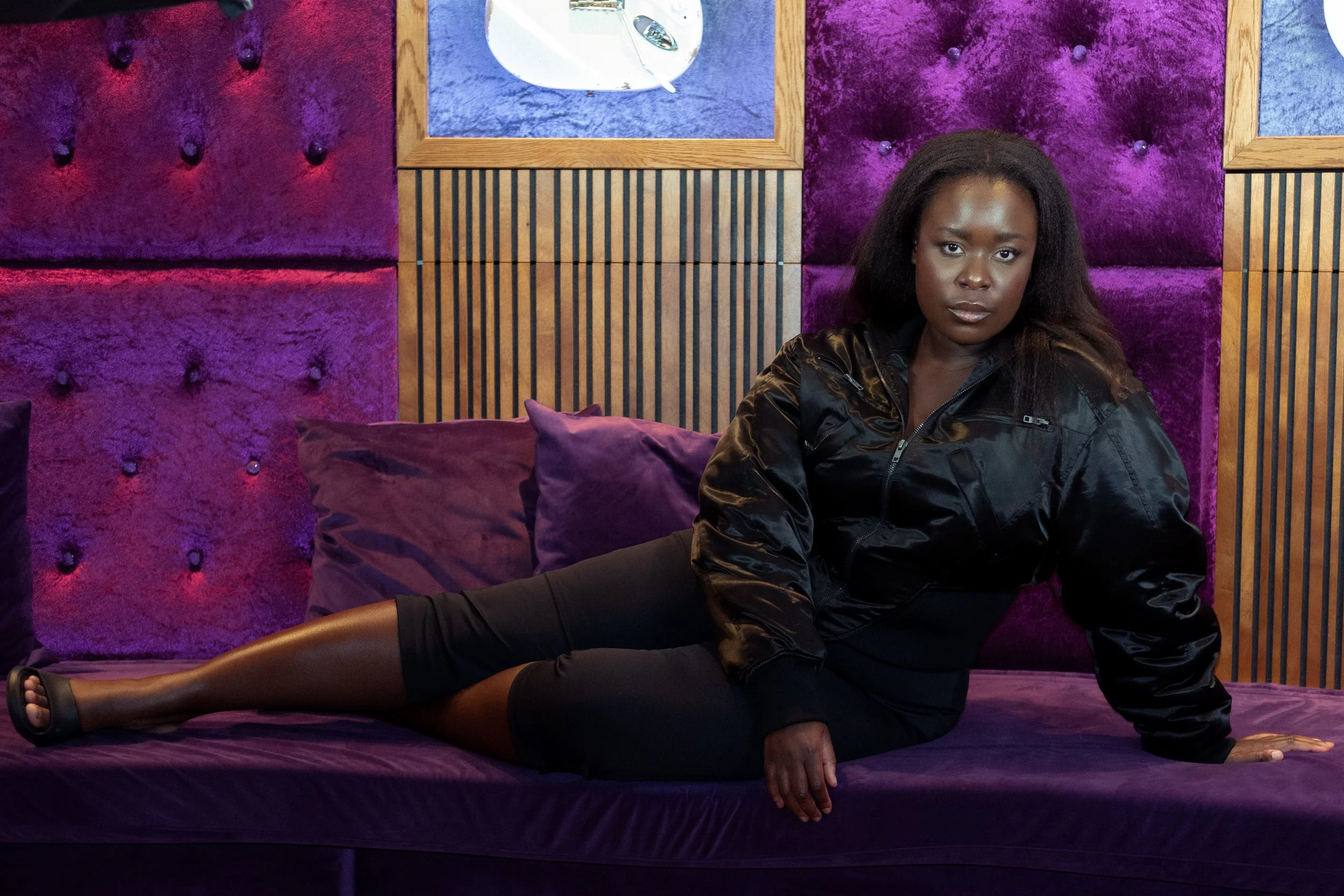
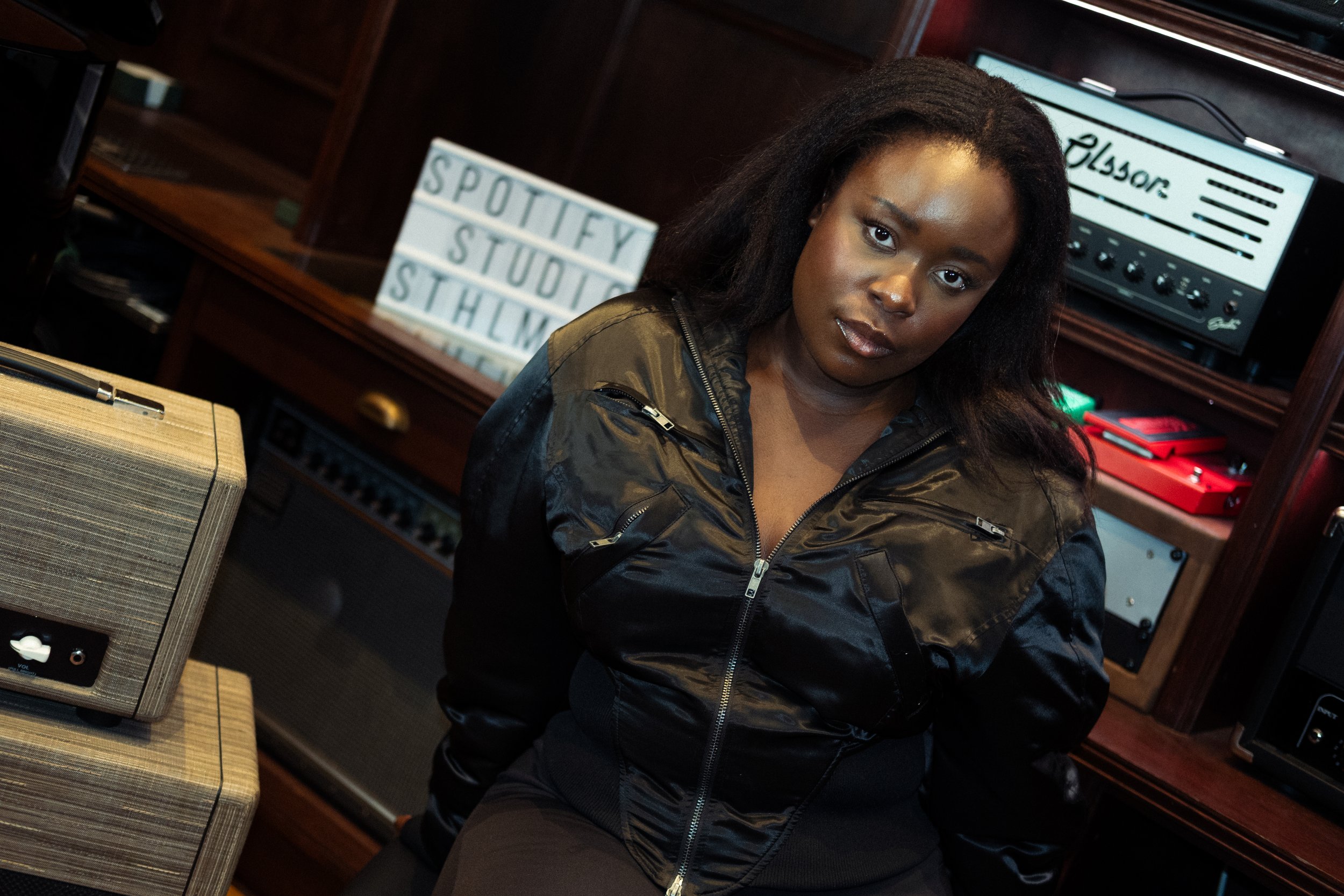
On this occasion, we sat down with Namasenda at Spotify’s studio in Stockholm to talk about the original track, female voices in the music industry, fashion, cringe and the minions.